An Artistic and Professional Perspective
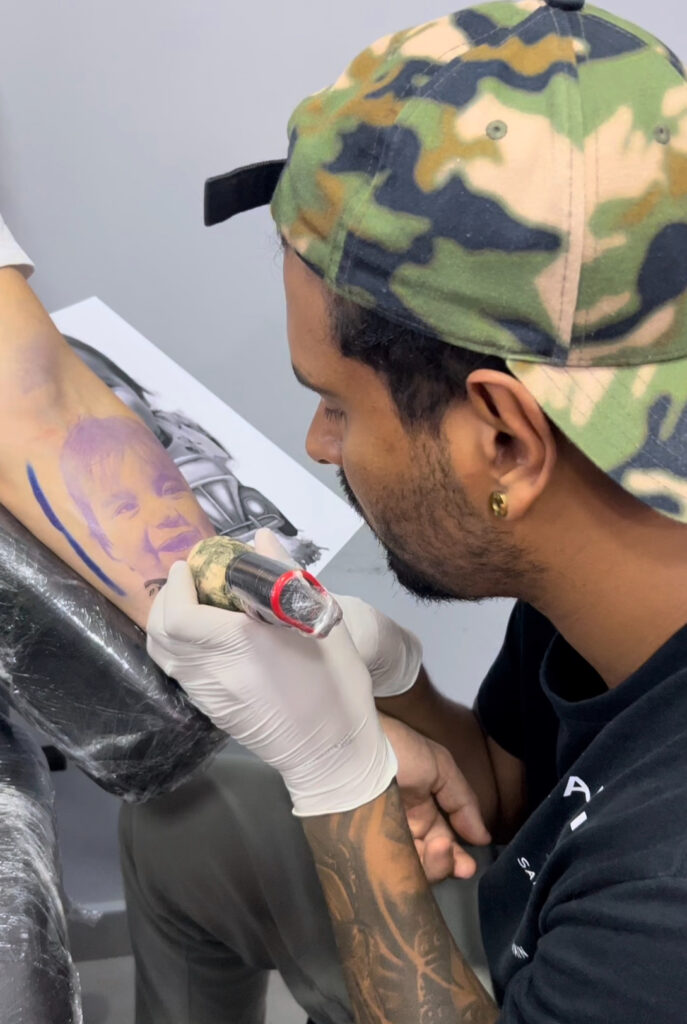
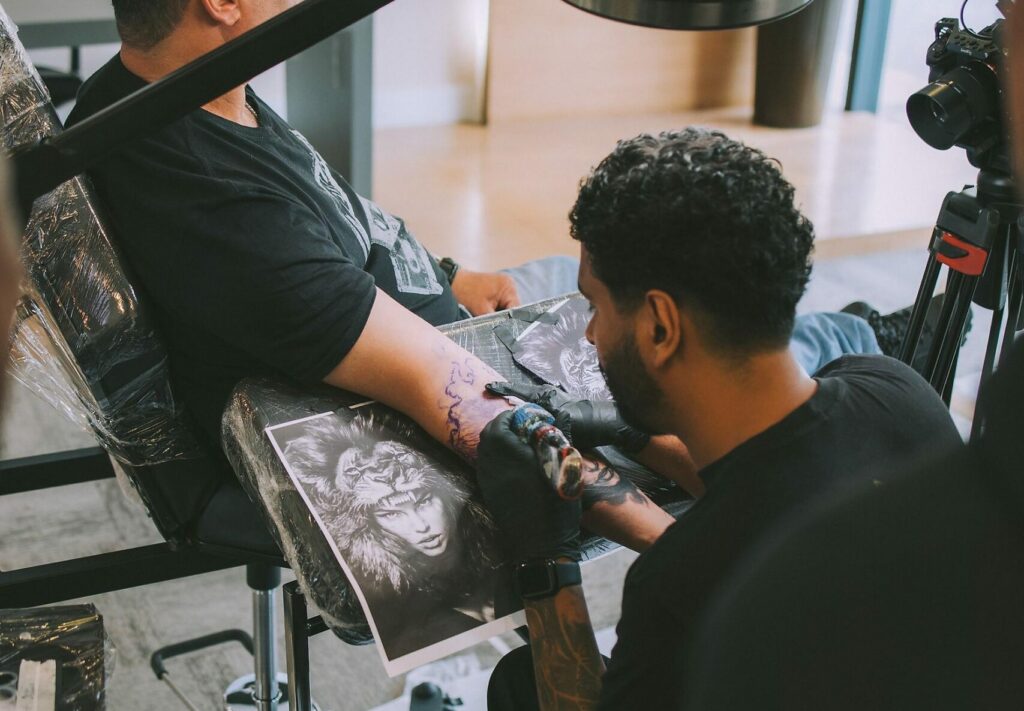
Tattooing has always been a deeply human form of expression, rich in symbolism, emotion, and identity. With the advancement of technology, new tools have begun to integrate into the creative process of artists, including artificial intelligence (AI). This article aims to reflect on the impact of AI on tattoo design, addressing its possibilities, limitations, and the practical experience of its use in the daily work of a tattoo artist specializing in black and gray realism.
Artificial Intelligence as a Creative Tool
In recent years, AI has proven to be a powerful ally in generating images and visual ideas. Tools like Midjourney and DALL·E allow the creation of artistic compositions from textual descriptions. In the field of tattooing, this represents a revolution: the artist can explore multiple variations of a concept in just a few minutes, testing styles, compositions, settings, and even unexpected fusions of visual elements. This speed in experimentation has enhanced the creative process, expanding the possibilities for customizing designs for each client.
AI and Tattoo Art: Revolution or Risk?
Like any powerful tool, artificial intelligence sparks debate among artists. On one hand, it expands creative possibilities, democratizes access to visual references, and helps professionals optimize their time. On the other hand, it raises important ethical questions: to what extent is an AI-generated image truly the artist’s creation? Could automation trivialize tattoo art, turning it into a generic product? In my daily work, I see AI as an ally, but I always maintain a focus on personalization, the study of anatomy, and deep dialogue with the client to preserve the authenticity of the art.
Professional Experience and Impact on the Creative Process”
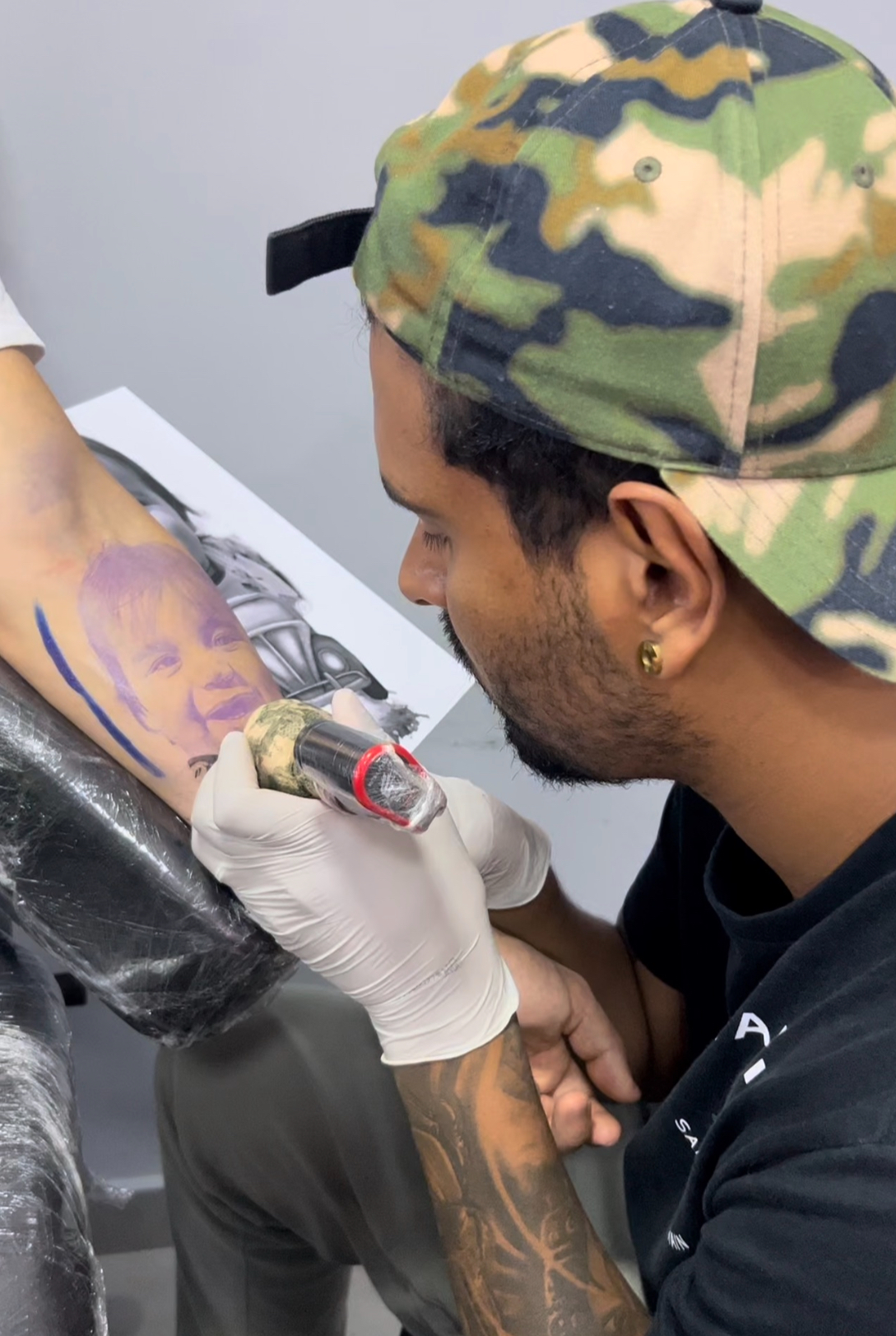
As a tattoo artist with over seven years of experience specializing in Black and Grey, I began integrating artificial intelligence into my workflow during the initial sketching phase. AI has expanded my creative freedom in the early design stage. Still, the results generated by AI platforms require manual adjustments and artistic sensitivity to ensure visual harmony and proper adaptation to the client’s anatomy.
Practical Examples of Using Artificial Intelligence
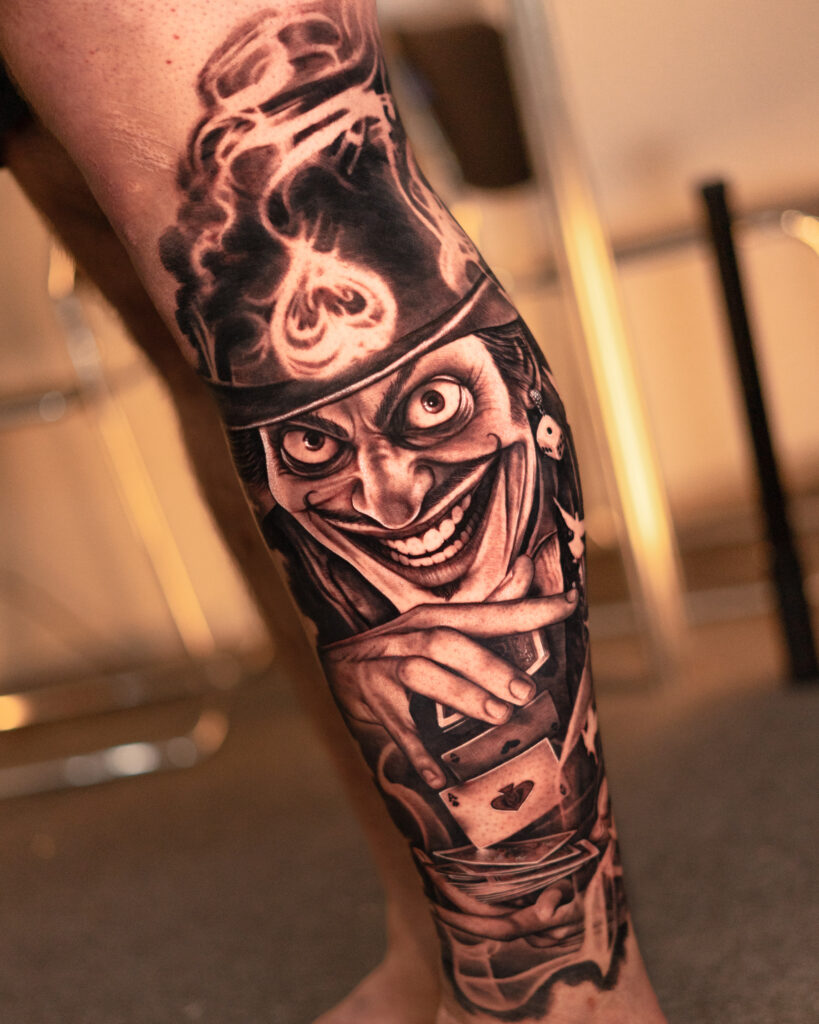
Project 1 – A magician throwing cards in motion was developed to convey dynamism, mystery, and theatricality. AI helped compose different scenes of the character in action, manipulating cards in the air with dramatic variations in lighting. From these explorations, the final design was redrawn with a focus on intense shadows and expressive facial features of the magician.
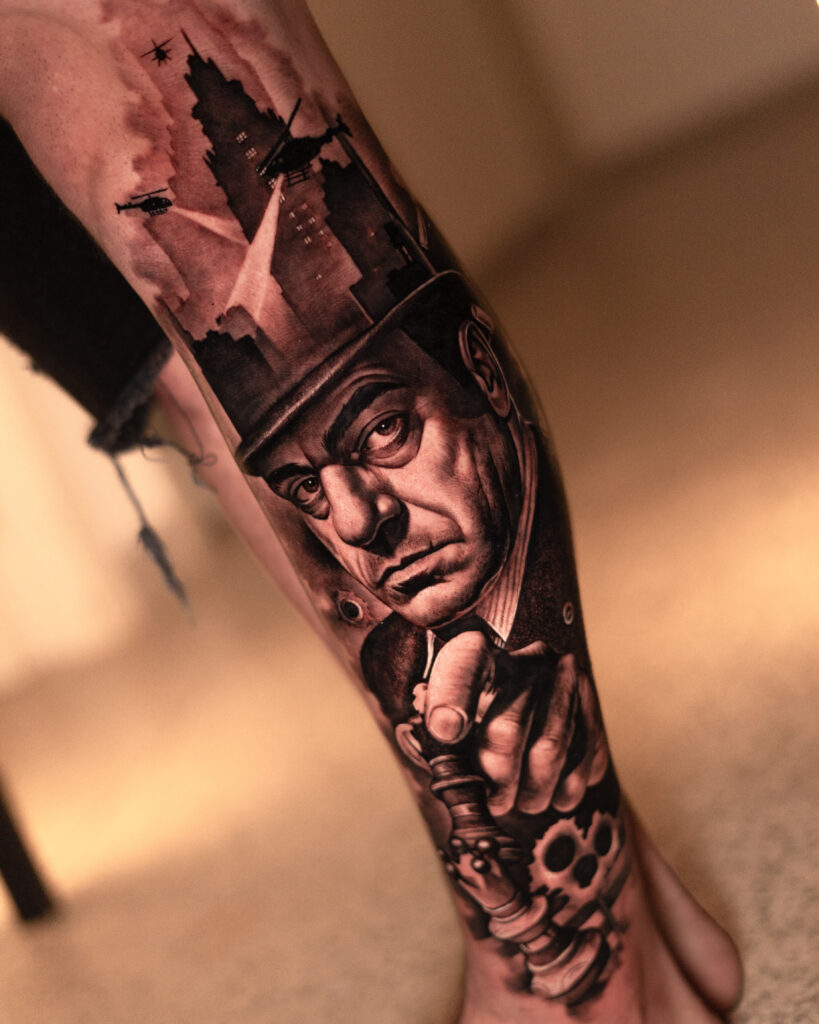
Project 2 – Depicting a mobster holding a chess piece aimed to convey control, strategy, and authority. AI was used to test settings, expressions, and costumes with cinematic references. The result was a powerful, silent image with striking contrasts.
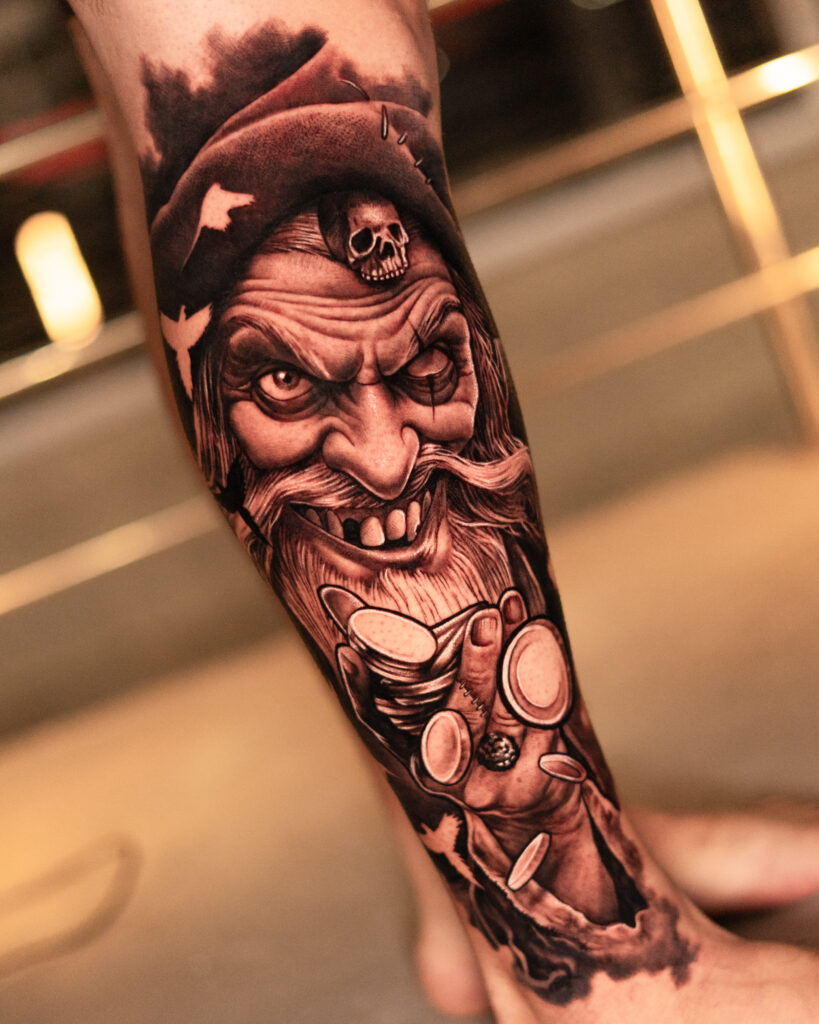
Project 3 – Inspired by the pirate universe, this piece aimed to convey an adventurous spirit, rebellion, and mysticism. The final design was precisely adapted to the client’s anatomy, preserving the epic narrative in harmony with the realism characteristic of the project.
Adoption of AI Tools by Tattoo Artists (2019–2024)
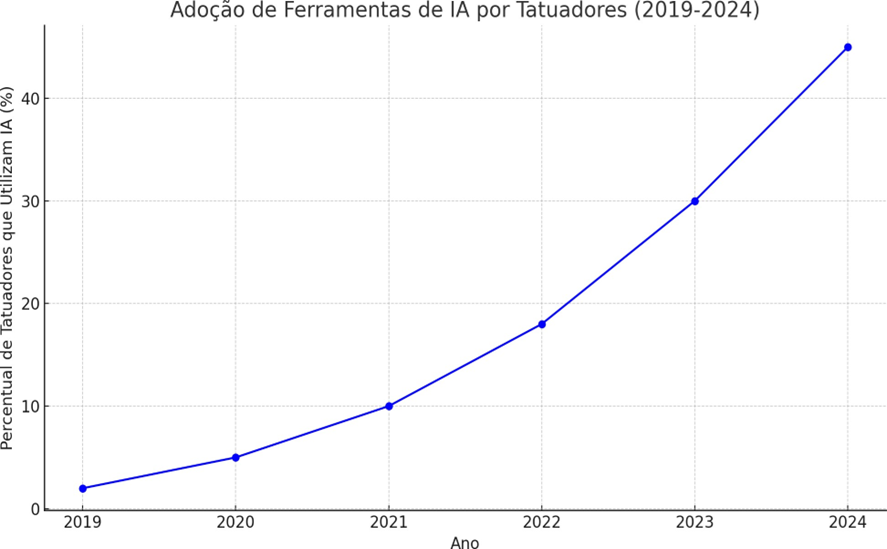
Elaboração própria, dados coletados pelo autor (2024).
The graph above represents the growth in the adoption of artificial intelligence tools by tattoo artists over the past few years.
Final Considerations
Artificial intelligence does not replace the tattoo artist, but it expands our creative pathways. When used judiciously, it accelerates visual brainstorming, stimulates surprising variations, and engages the client collaboratively. Still, the human touch remains essential: it is what corrects proportions, enhances contrasts, and transforms digital ideas into works that live on the skin.
References
ELGAMMAL, A. et al. CAN: Creative Adversarial Networks, Generating “Art” by Learning About Styles and Deviating from Style Norms. 2017. Disponível em: https://arxiv.org/abs/1706.07068. Acesso em: 24 abr. 2025.
GATYS, L. A.; ECKER, A. S.; BETHGE, M. A Neural Algorithm of Artistic Style. Journal of Vision Research, 2015.
MCCORMACK, J.; GANNAWAY, D.; D’INNOCENZO, D. Computational Creativity and the Artist: Case Studies of Cocreation in Music and Visual Art. Leonardo, v. 52, n. 2, p. 138–144, 2019.
INSTAGRAM. Project 1 – Magician throwing cards. Available at: https://www.instagram.com/p/DChdH7dyJRk/?igsh=MWoyNnF6MnVsMGpuYQ==.
INSTAGRAM. Project 2 – Mobster holding a chess piece. Available at: https://www.instagram.com/p/DBUOly1yhYy/?igsh=MjcxeG9qbHU3ank2.
INSTAGRAM. Project 3 – Pirate-themed design. Available at: https://www.instagram.com/p/C_OeMX2SonP/?igsh=MTJiYWdkZGF6MTdqbQ==.